
How to Treat Achilles Tendon Injuries
Achilles tendon injuries affect the strong band connecting your calf muscles to your heel, causing pain, stiffness, swelling, or weakness. A podiatrist can determine whether the problem is tendinitis, a partial strain, or a rupture, then recommend personalized treatment to reduce symptoms, restore movement, and support a safe return to activity.
What causes Achilles tendon injuries?
The Achilles tendon endures significant force whenever you walk, run, jump, climb stairs, or push off your foot. An injury can develop gradually through repeated stress or happen suddenly during sports and other physical activities.
Common contributing factors include:
- A rapid increase in training intensity, distance, or frequency
- Tight calf muscles or limited ankle flexibility
- Poor running mechanics or changes in footwear
- Repetitive jumping, sprinting, or uphill activity
- Age-related tendon changes or reduced tendon strength
- Previous Achilles problems or other lower-extremity injuries
Achilles tendon pain may also be influenced by foot mechanics. Flat feet, excessive inward rolling, or an uneven distribution of pressure can place additional strain on the tendon. A biomechanical evaluation can help identify these contributing factors and guide treatment.
What are the symptoms of Achilles tendon injuries?
Symptoms vary depending on the location and severity of the injury. Achilles tendinitis, also called tendinopathy, often causes pain and stiffness that are worse with the first steps after rest or during activity. The discomfort may improve temporarily as the tendon warms up, then return afterward.
Other possible symptoms include:
- Tenderness or swelling along the tendon or near the heel
- Thickening of the tendon
- Pain when walking, running, or rising onto the toes
- Weakness during push-off
- A sudden snapping or popping sensation
- Difficulty bearing weight after an acute injury
A gradual onset of pain does not mean the condition is minor. Continuing to exercise through symptoms can worsen tendon damage and lengthen recovery.
When should you see a podiatrist?
Schedule an evaluation when Achilles pain lasts more than a few days, repeatedly returns, limits normal movement, or interferes with work, exercise, or sleep. Prompt professional care is especially important after a sudden injury.
Seek urgent evaluation if you experience a pop, immediate swelling, severe pain, visible bruising, or an inability to push off the foot. These symptoms can indicate a partial or complete Achilles tendon tear. Do not attempt to “walk it off” or aggressively stretch the tendon while waiting for care.
Our Achilles Tendonitis resource provides additional condition-specific information, while our Contact page can help you arrange an appointment in the Monroe, MI area.
How does a podiatrist diagnose Achilles tendon injuries?
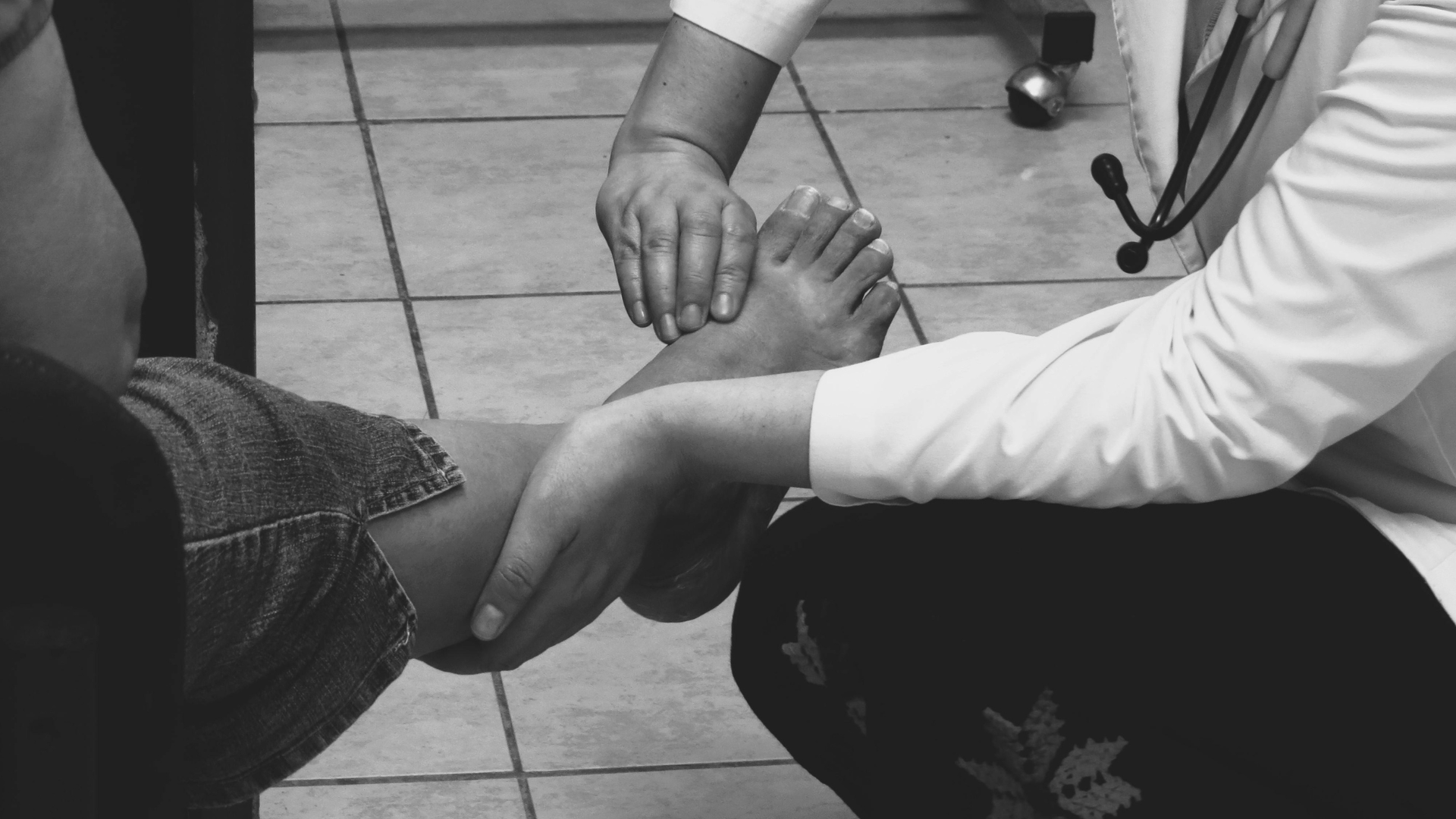
Diagnosis begins with a detailed discussion of your symptoms, activity level, medical history, and how the injury occurred. Your podiatrist will examine the tendon, ankle, calf, and foot mechanics to assess tenderness, swelling, strength, flexibility, and range of motion.
The examination may include:
- Observing how you stand and walk
- Checking ankle movement and calf flexibility
- Comparing strength between both legs
- Assessing pain during controlled movement
- Performing specific tests when a rupture is suspected
Imaging is not always necessary for mild tendon irritation. When the diagnosis is unclear or a more serious injury is suspected, ultrasound or magnetic resonance imaging may help show tendon thickening, inflammation, a partial tear, or a rupture. X-rays may be used to evaluate bone-related conditions or heel changes that contribute to pain.
Accurate diagnosis matters because treatment for a mild overuse injury differs from treatment for a significant tear. It also helps distinguish Achilles problems from other sources of rear-foot pain, including bursitis, a stress injury, or nerve-related symptoms.
What treatments can help Achilles tendon pain?
Treatment depends on the injury’s severity, your health, your activity goals, and how long symptoms have been present. Your podiatrist may recommend a combination of approaches rather than one isolated treatment.
Activity modification
Temporarily reducing running, jumping, hills, or other painful activities allows the tendon to settle without stopping all movement. Low-impact options may be appropriate if they do not increase symptoms.
Support and footwear changes
Cushioned, supportive footwear can reduce stress during daily activity. In some cases, temporary heel lifts, bracing, or other support may be recommended. Avoid abruptly switching to minimalist shoes or unsupportive footwear while the tendon is painful.
Physical therapy and strengthening
A guided rehabilitation program may include calf flexibility work, progressive resistance exercises, balance training, and gradual loading. Eccentric or other tendon-strengthening exercises can be helpful when introduced at the right stage and performed correctly.
Orthotics and biomechanical care
Custom or supportive Orthotics may help improve pressure distribution and foot alignment when mechanics contribute to tendon overload. Orthotics are most effective when selected as part of a complete evaluation rather than used as a one-size-fits-all solution.
Medication and other interventions
Your provider may discuss appropriate pain-relief options based on your medical history. In selected cases, additional procedures or referral for surgical consultation may be considered. If a rupture is suspected, treatment may involve immobilization and prompt evaluation by an appropriate specialist.
How long does Achilles tendon recovery take?
Recovery time depends on whether the problem is irritation, tendinopathy, a partial tear, or a complete rupture. Mild symptoms may improve over several weeks with consistent care and appropriate activity changes. More established tendinopathy can require several months of progressive rehabilitation.
A tendon may feel better before it has regained full capacity. Returning to running or sports too quickly can trigger a setback. Your podiatrist may help you progress through stages such as:
- Comfortable walking and daily activities
- Controlled strengthening without increased next-day pain
- Low-impact conditioning
- Short, easy jogging or sport-specific drills
- Gradual return to full training and competition
The timeline should be based on function, strength, pain response, and tendon tolerance—not a calendar date alone.
Can Achilles tendon injuries be prevented?
No prevention plan eliminates every injury, but several habits can reduce unnecessary tendon stress:
- Increase exercise volume gradually
- Warm up before intense activity
- Maintain calf and ankle flexibility
- Strengthen the calves and supporting muscles
- Replace worn-out athletic shoes
- Address recurring foot or ankle mechanics concerns
If you have repeated ankle problems, review our Ankle Sprains page and ask about a broader biomechanical assessment. Treating related issues early may help you stay active more comfortably.
Frequently asked questions
Can I keep exercising with Achilles tendon pain?
Avoid activities that cause sharp pain, limping, or worsening symptoms afterward. Ask a podiatrist which low-impact movements are appropriate while the tendon heals.
Is Achilles tendinitis the same as a tear?
No. Tendinitis or tendinopathy generally involves irritation and degeneration, while a tear means tendon fibers have been partially or completely disrupted. An examination is needed to distinguish them.
Do Achilles tendon injuries always require surgery?
No. Many overuse injuries improve with conservative care. A complete rupture or severe structural injury may require surgical or specialist evaluation, depending on individual circumstances.
Should I stretch a painful Achilles tendon?
Gentle mobility may be useful for some patients, but forceful stretching can aggravate an active injury. Follow an individualized plan rather than stretching through pain.
Key takeaways for Achilles tendon care
Achilles tendon injuries are easier to manage when evaluated early and treated according to their severity. Pain, stiffness, swelling, weakness, or a sudden pop should not be ignored—especially if symptoms affect walking or athletic performance. A podiatrist can identify the source, address contributing foot mechanics, and create a staged plan involving activity changes, support, strengthening, and follow-up. If you are in Monroe, MI, compare your symptoms with the guidance above, avoid pushing through significant pain, and schedule an evaluation. The right next step is a personalized diagnosis and a safe, gradual return to the activities you value.